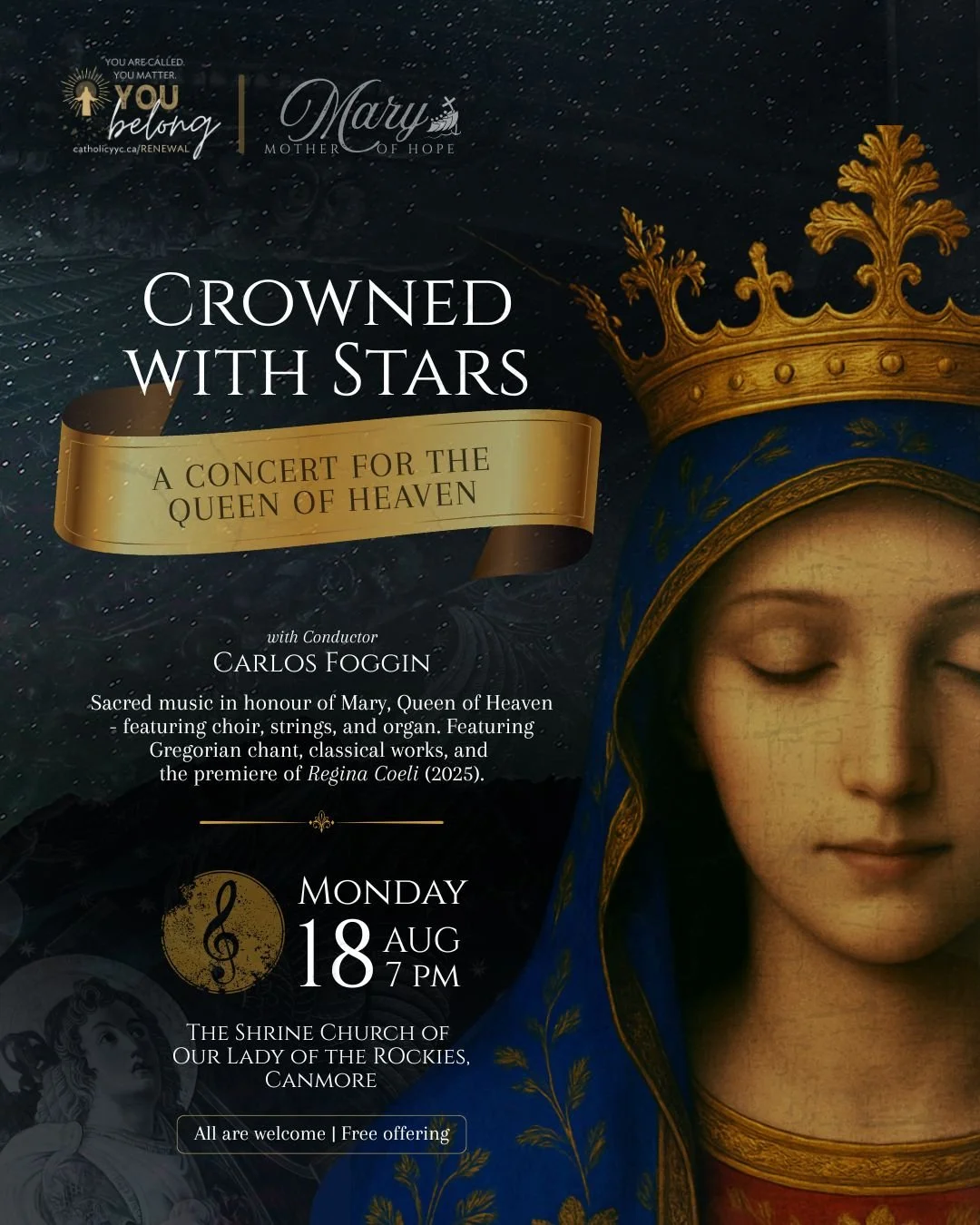
Crowned with Stars
Marquis Chamber Orchestra & Choir
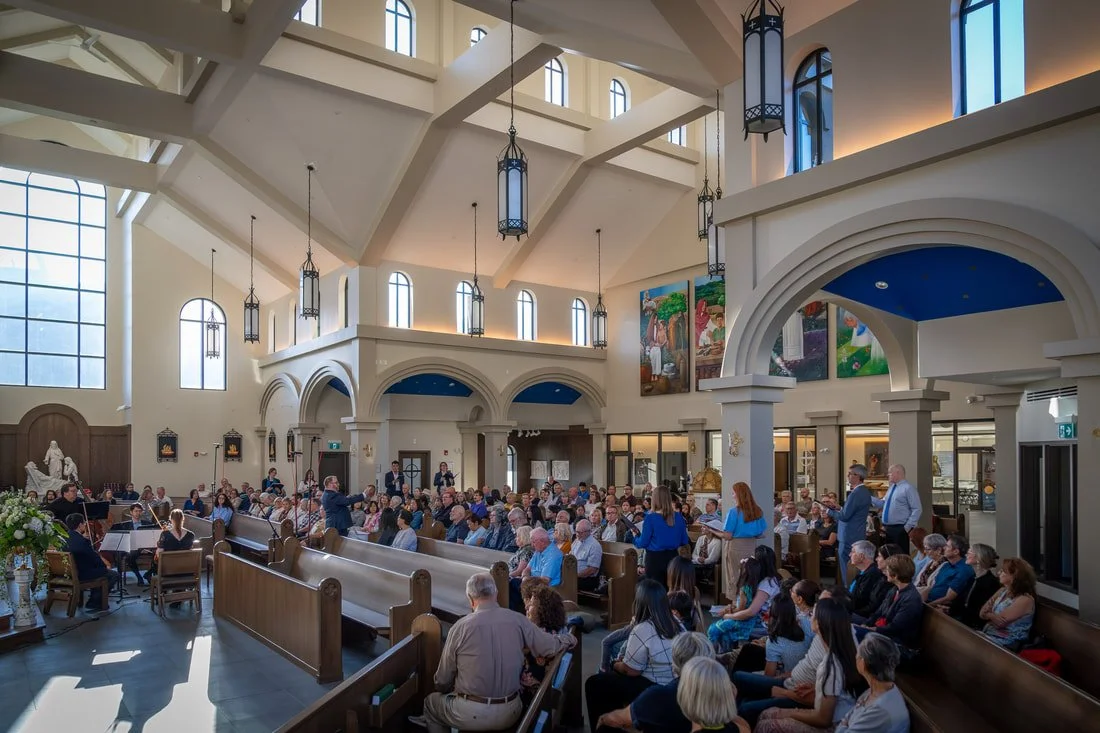
August 18, 2025 · Shrine Church of Our Lady of the Rockies, Canmore, Alberta
In August 2025, Marquis Music brought an evening of sacred music to the Shrine Church of Our Lady of the Rockies in Canmore as part of the Diocese of Calgary’s Jubilee Marian Week.
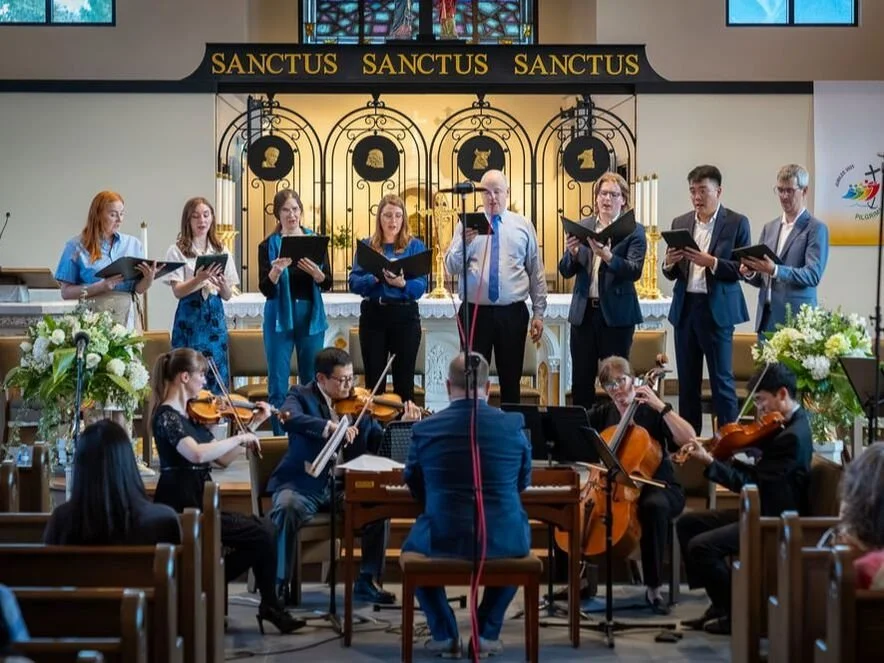
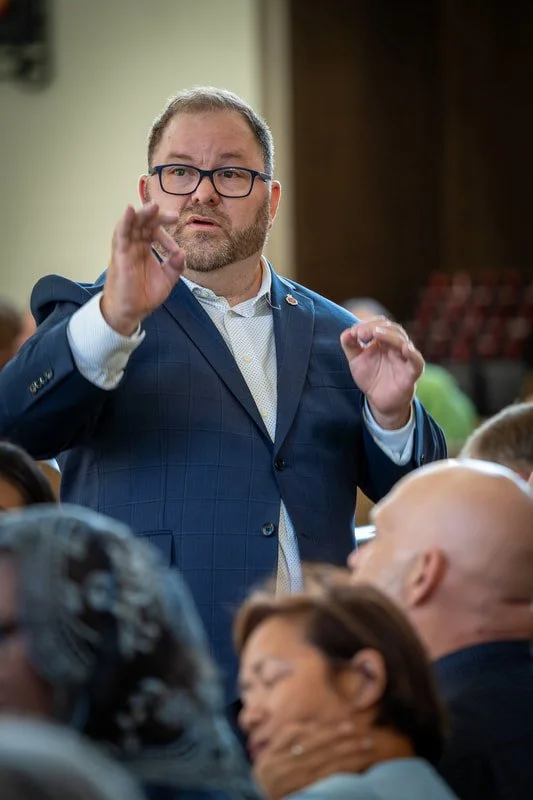
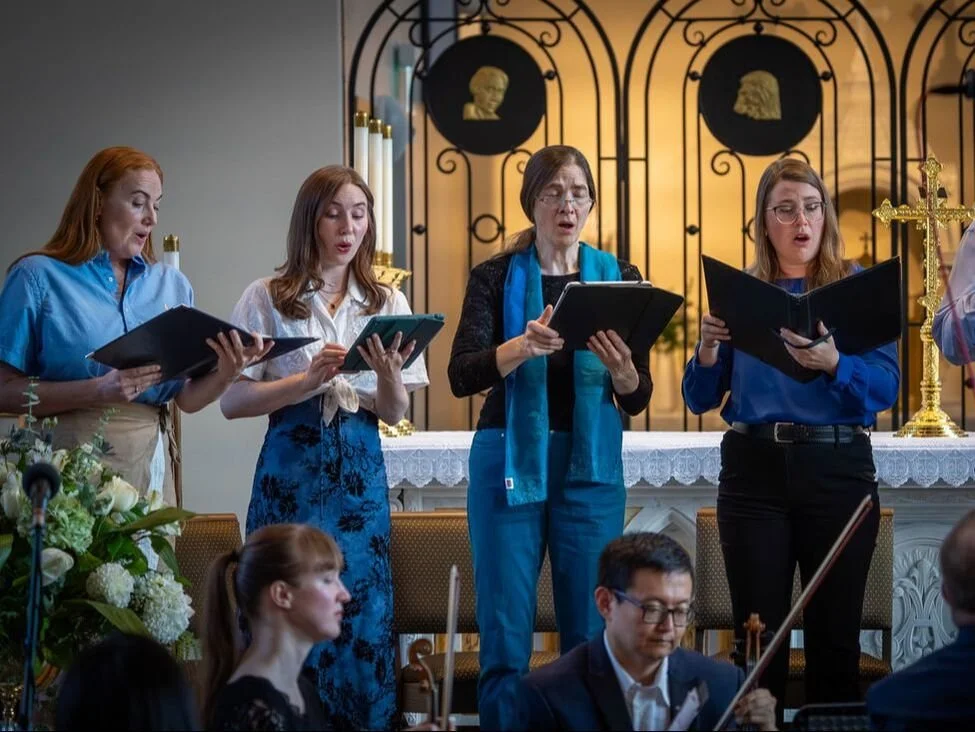
Crowned with Stars: A Concert for the Queen of Heaven brought together professional singers, a chamber string ensemble, organ, and conductor Carlos Foggin for a programme spanning nearly a thousand years of sacred musical tradition. At its centre was the premiere of Foggin’s Regina Caeli, a new work written especially for the occasion.
The concert was an exploration of the musical tradition surrounding the Blessed Virgin Mary—from the earliest Gregorian chant through Renaissance polyphony and the music of the Baroque and Classical periods, culminating in a new composition that drew these traditions together.
From Chant to Mozart
The programme was deliberately varied, but its individual pieces were connected by their relationship to sacred music and the liturgical life of the Church.
The evening began with the ancient sound of Gregorian chant, followed by Renaissance polyphony from composers including Thomas Tallis and Josquin des Prez. Marian hymns connected the formal concert repertoire with the devotional musical traditions familiar to generations of worshippers.
The programme then moved into the Baroque period with selections from Girolamo Frescobaldi’s Messa della Madonna, before turning to the elegant Church Sonatas of Wolfgang Amadeus Mozart.
Written for use during the liturgy, Mozart’s short sonatas are a fascinating part of the sacred repertoire. Their bright, graceful character offered a striking contrast to the austere beauty of chant and the intricate vocal writing of Renaissance polyphony.
Together, the works created a musical journey through centuries of Catholic sacred music.
The Premiere of Regina Caeli
At the heart of the concert was the premiere of Carlos Foggin’s Regina Caeli, written specifically for the Canmore performance.
The Regina Caeli is one of the Church’s four traditional Marian antiphons, sung during the Easter season. Its ancient text begins with a joyful invitation to the Queen of Heaven:
Regina caeli, laetare, alleluia.
Rather than treating the Gregorian chant as something belonging only to the past, Foggin used it as the foundation for a new musical work.
The composition for choir and strings incorporates fragments of melodies heard throughout the evening, weaving them together with the Gregorian Regina Caeli. Melodic ideas that had appeared earlier in the programme return in transformed ways, creating connections between the different musical worlds represented in the concert.
The result was intended to make the entire programme feel interconnected—as though the music of the evening were threads in a single tapestry.
An Ancient Tradition, Newly Heard
The premiere of Regina Caeli also reflected a central reality of sacred music: the repertoire we now regard as historic was once new.
Gregorian chant developed over centuries. Renaissance composers continually reimagined the musical language they inherited. Composers such as Frescobaldi and Mozart wrote new music for the liturgical circumstances of their own time.
The creation of a new Regina Caeli places the work within that same continuing tradition.
The goal was not to recreate the past, but to allow an ancient text and an ancient melody to speak through a contemporary musical voice. By incorporating musical references from the rest of the programme, the new composition could look simultaneously backward and forward—honouring the tradition while contributing something new to it.
Music in the Shrine
The Shrine Church of Our Lady of the Rockies provided a particularly meaningful setting for the performance.
The combination of professional voices, strings, and organ allowed the music to fill the church with a sound that was both intimate and ceremonial. The architecture and acoustics of the Shrine became part of the experience, connecting the concert repertoire with the sacred environment for which much of this music was originally conceived.
The evening was presented not simply as a concert of historical works, but as an invitation to encounter sacred music as a living tradition.
Looking Back
Crowned with Stars represented an important moment in Marquis’s developing work in sacred and collaborative music.
The evening brought together music separated by centuries, yet connected by a common tradition: ancient chant, Renaissance polyphony, Marian hymnody, Baroque and Classical sacred music, and a new composition written for the present day.
At the centre of it all was Regina Caeli—an ancient prayer, an ancient melody, and a new musical voice.
The Canmore premiere was a reminder that sacred music is not simply something preserved in the past. It continues to evolve, to inspire new composition, and to bring performers and audiences into conversation with a musical tradition that stretches back more than a thousand years.
For Marquis, the evening remains a meaningful example of that continuing conversation: honouring the music we have inherited while creating something new for those who will hear it next.